A sea stack and cliffs on the coast, shot on film: color palette
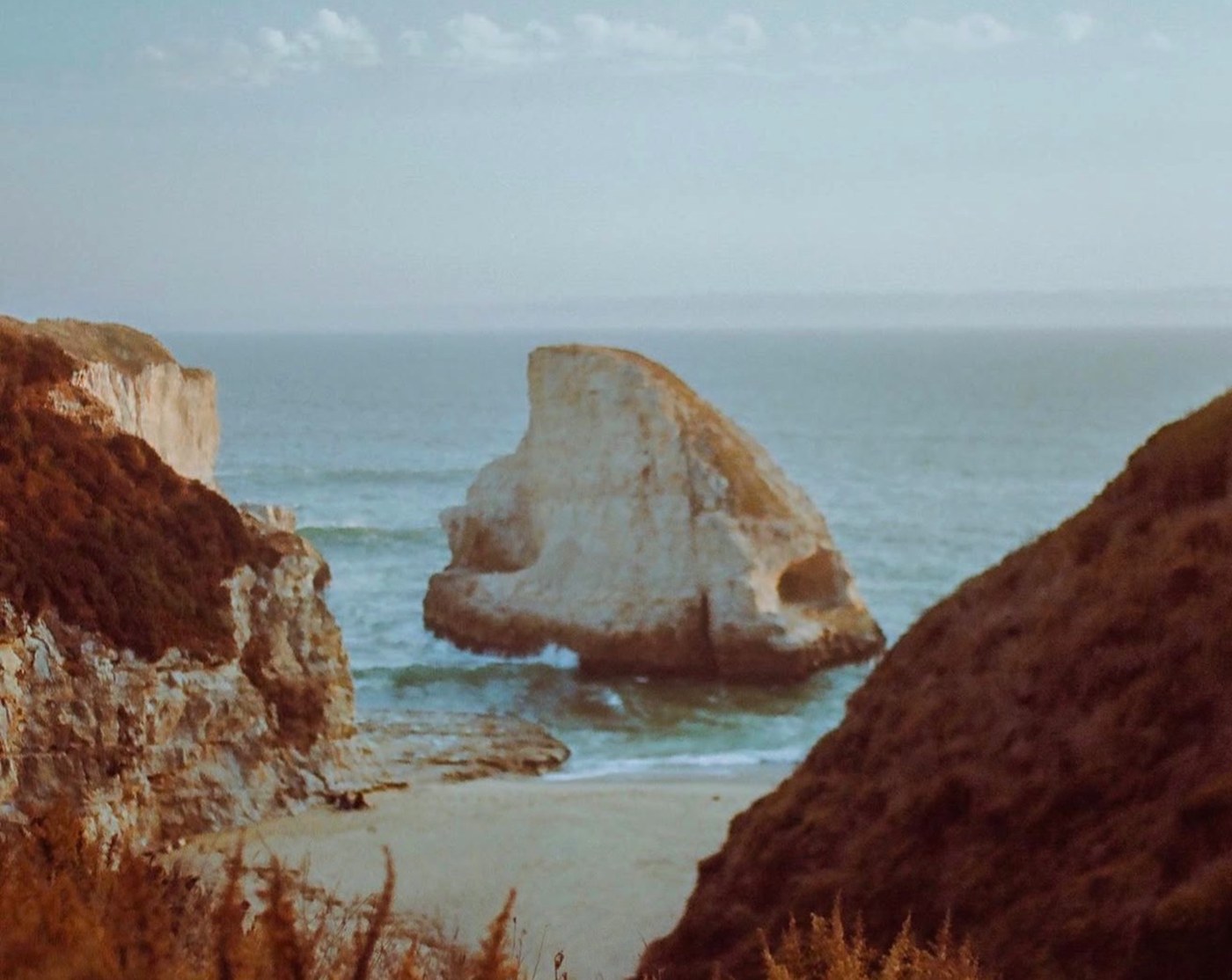
A mid-toned image anchored by deep umber (17%), with glacier blue as the light (62%) and burnt umber as the charge (21%). The clearest relationship is value: deep umber sits far darker than glacier blue, so the light reads bright.
Glacier blue, burnt umber and deep umber
- Anchor: Deep umber #3D1814, 17%. Deep umber is the darkest group, about 17% of the image, in a band through the lower third. It carries a warm hue, so the shadows read as color. It sits far darker than glacier blue, a strong value range that makes the light read bright.
- Energy: Burnt umber #6B361E, 21%. Burnt umber has the highest chroma in this palette, about 21% of the image, in the lower left. It shares the temperature of the rest of the palette, so its force comes from chroma. At about 21% it covers as much of the image as the Anchor or more, so it reads as a major color as well as the charge.
- Atmosphere: Glacier blue #B2C6CF, 62%. Glacier blue is the lightest quiet group, about 62% of the image, across most of the image. Its chroma is close to neutral, so it reads as light and air. As the largest group, it sets the mood of the image.
Glacier blue, the Atmosphere, is the largest group at about 62% of the image.
Against the framework starting point of 55, 20, 20 and 5, this image gives the Atmosphere 42 points more.
Iris measures the colors in your image and gives you the palette in proportion. Your photo stays on your device.
More examples
- Wassily Kandinsky, Improvisation No. 30 (Cannons), 1913
- Utagawa Hiroshige, Mitsuke: Ferries Crossing the Tenryu River
- Polished river stones on black
- Storm clouds over mountain ridges at sunset
- A turquoise and cream wall with grasses in late sun
- A snow-patched summit under storm clouds
- A train carriage vestibule with a red light leak
- A sunlit room with a terracotta tile floor
- A chapel interior with striped marble arches
- A full moon over a field at dusk, seen from the road